
Lieutenant Darrell O Smith USMC
Silver Star
Darrell Otto Smith was born on 17 July 1925 to Otto and Eva Smith in Clovis, New Mexico. He was their only son and had a sister that was 2 years younger. His father was an attorney in private practice and the family lived on a farm that his mother managed. After graduation from Clovis HS in 1944, Darrell enlisted in the US Marines. After completion from boot camp at Paris Island in South Carolina, he was assigned to the 1st Battalion, 9th Marines, 3rd Marine Division then in training on Guam for the invasion of Iwo Jima. The 9th Marines were part of the reserve force and arrived off Iwo Jima on D Day in February 1945. On D+ 5 the 9th disembarked ship and went ashore. As the spearhead of the 3rd Marine Division, its Marines led the assault that captured Motoyama Airfield No. 2, broke the Japanese main line of resistance in the central Motoyama Plateau, and made the final breakthrough to Iwo's northeastern shore, shattering the enemy's last line of defense. It was the most costly battle in the history of the Marine Corps. Following the war, Darrell left the marines and attended the University of New Mexico from 1946 to 1948 while part of their Naval ROTC unit. In the fall of 1948 he transferred to NMAMC and over the next three years completed his BS in Agriculture (Animal and Range Husbandry).
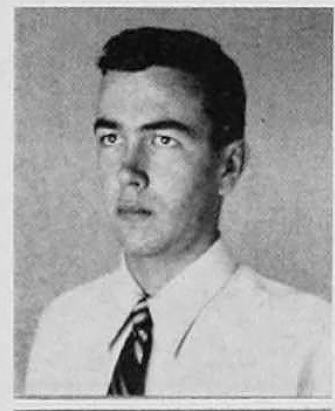
While attending NMAMC he participated in the Rodeo Club. Upon graduation in the spring of 1951 he once again enlisted in the US Marine Corps and was sent to Quantico VA for Officers Candidate School. In September 1951 he was commissioned as a Second Lieutenant and sent to Infantry School. In April 1952 he was assigned to Company H, 3rd Battalion, 7th Marines, 1st Marine Division. This unit had been in Korea for some time and was battle hardened from the Battle of the Chosin Reservoir. By the fall of 1952, the Korean War had turned into a stagnant battle of strategic outpost along the 38th parallel as both sides fought to gain strategic footholds as peace talks dragged on. The 7th Marines were responsible for defending the main route between North Korea and Seoul, South Korea. On October 6, 1952 2nd Lt Darrell Smith was assigned to the platoon defending Outpost Frisco when the night sky above Outpost Frisco was filled with the artillery and mortar shells of the attacking Chinese army. The number of incoming rounds reached a rate of 1,000 per hour. Outpost Frisco was a forward observation point on a hill 600 yards in front of the main line of resistance. Before the barrage ended, the hillside was swarming with enemy soldiers who had tunneled underground for more than a mile to launch their surprise attack. Of the 54 Marines at Outpost Frisco, only eight were able to walk off the hill when their fellow Marines finally were able to fight through
The President of the United States of America takes pride in presenting the Silver Star (Posthumously) to Second Lieutenant Darrell Otto Smith (MCSN: 0-55018), United States Marine Corps, for conspicuous gallantry and intrepidity while serving as a Platoon Commander with Company H, Third Battalion, Seventh Marines, FIRST Marine Division (Reinforced), in action against enemy aggressor forces in Korea on 6 – 7 October 1952. Second Lieutenant Smith displayed outstanding courage, initiative and devotion to duty during the defense of a vitally important hill position forward of the main line of resistance. When the enemy commenced a devastating barrage of artillery and mortar fire and followed by a savage attack by an overwhelming number of enemy troops, he expressed complete disregard for his personal safety and remained in the exposed trench. Throughout the action, he called effective fire missions for friendly mortars and artillery and directed the efforts of his men. When, in spite of his determined efforts, the enemy overran the outpost and the defenders were locked in hand-to-hand combat, he stood shouting encouragement to his comrades and throwing hand grenades. During the close fighting, he was critically wounded but even as he was being carried to a bunker, he continued to concern himself about the welfare of his men. As a result of his wounds, he died, gallantly giving his life for his country. Second Lieutenant Smith’s gallant and courageous actions were in keeping with the highest traditions of the United States Naval Service.
Lt Darrell Otto Smith, veteran of Iwo Jima, was 27 years old when he died in defense of Outpost Frisco. Immediately following the fight, the outpost was deemed too costly to defend and abandoned. Today he is buried in the Mission Garden of Memories Cemetery in Clovis NM.