
Private Carl Fred Bamert USA
Carl Fred Bamert was born in Dona Ana County NM on 17 July 1895 to Mike and Ida Bamert. His parents had immigrated to the Mesilla Valley from Germany and Switzerland and farmed in the Picacho Peak area. Carl was the oldest of six children. While a young boy he attended the preparatory school at New Mexico Agriculture and Mechanical Arts College. In the summer of 1917, Carl was 22 years old and living in Tyrone NM before being called to service in the US Army. On 23 June 1918, after training at Camp Funston, Carl departed New York for France aboard the ship Metagama. Upon arrival in France, he was assigned as a replacement to the 9th Infantry Regiment, 3rd Infantry Brigade, 2nd Infantry Division. This unit had recently fought at Chateau Thierry. In mid-July 1918, the 2nd Infantry Division took part in the Aisne Marne offensive north of Soissons. In September, the unit participated in the St Mihiel Offensive, capturing the town of Thiaucourt. After relief from the St Mihiel Offensive the 2nd Division marched to the relief of the French Fourth Army west of Somme Py. On September 30th, his unit trucked to the town of Suippes in support of the stalled French advance along the Champagne front. The principal objective given the 2nd Division was to capture the German strongpoint at Blanc Mont.
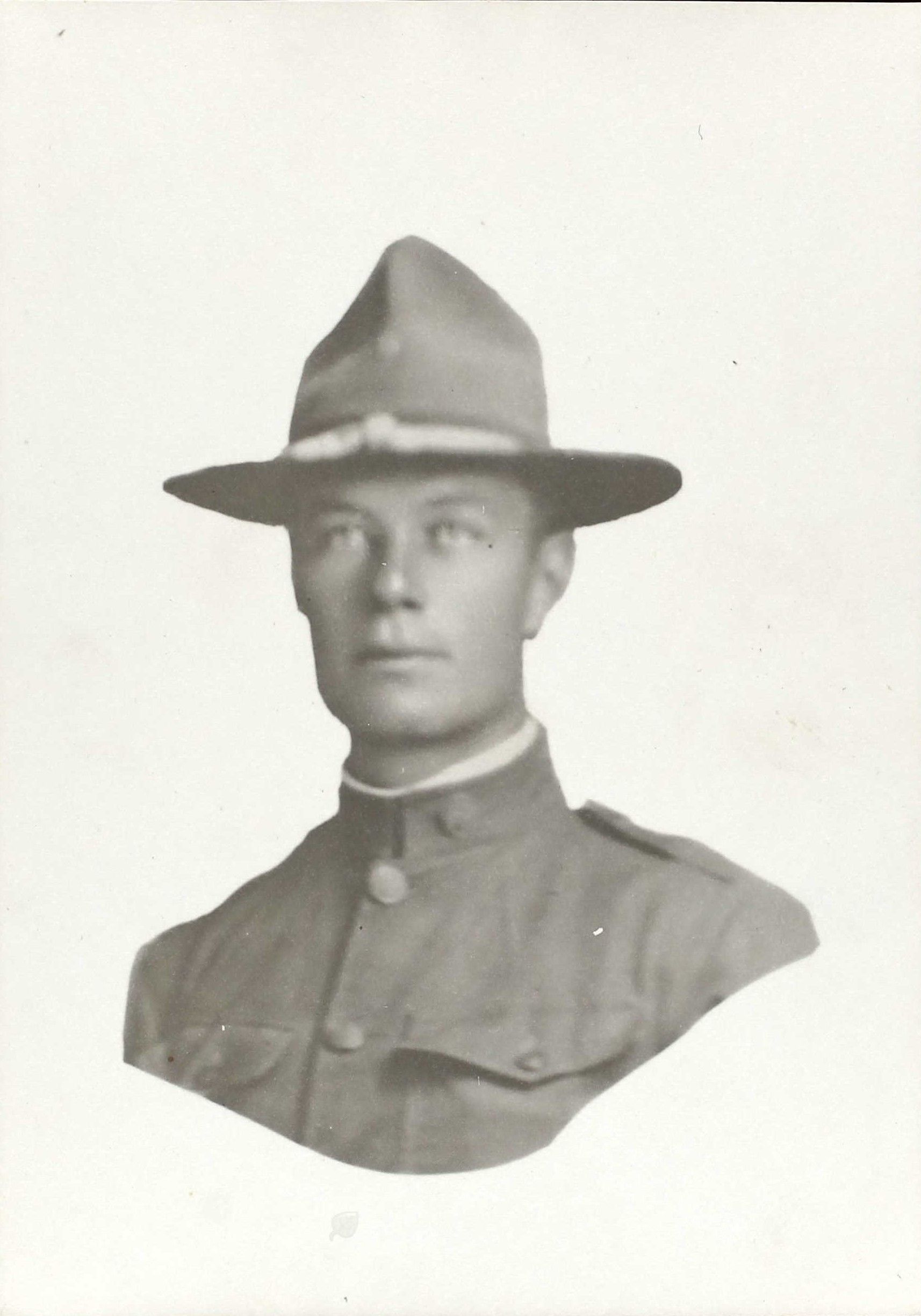
Blanc Mont was a key defensive position in the German Siegfried line and its successful capture was essential to the continued success of the Allied offensive then underway. On 3 October 1918, the attack began. Despite a determined resistance, the Americans were able to drive a three mile deep a salient into the German lines, a remarkable feat. Intense fighting continued over the ensuing days. Carl Fred Bamert is reported to have been killed in action on 5 October 1918. He was 22 years of age at the time he gave his life in service to his country. The determined effort of the American troops in taking and holding Blanc Mont was of strategic importance in the advances that eventually led to the end of hostilities.
During the First World War, there was a great deal of delay, confusion and error in US documentation regarding its troops and reporting their losses. This only heightened the impact on families of our soldiers who were lost. In the case of Carl Bamert, his parents received a telegram from the war department in November 1918, informing them that their son was reported missing in action on 4 November 1918. Subsequent to that telegram, his parents received two letters from their son. It was a great shock to the family when they received a second telegram informing them that their son was killed in action on 5 October 1918. His body was eventually returned home and today lies buried in the Las Cruces Masonic Cemetery.